In a short time, stablecoins have gone from a niche phenomenon within crypto-assets to something increasingly discussed in a broader financial context. They are digital assets with a stable value, usually pegged to a traditional currency or backed by short-term government bills, and they enable fast, global transactions.
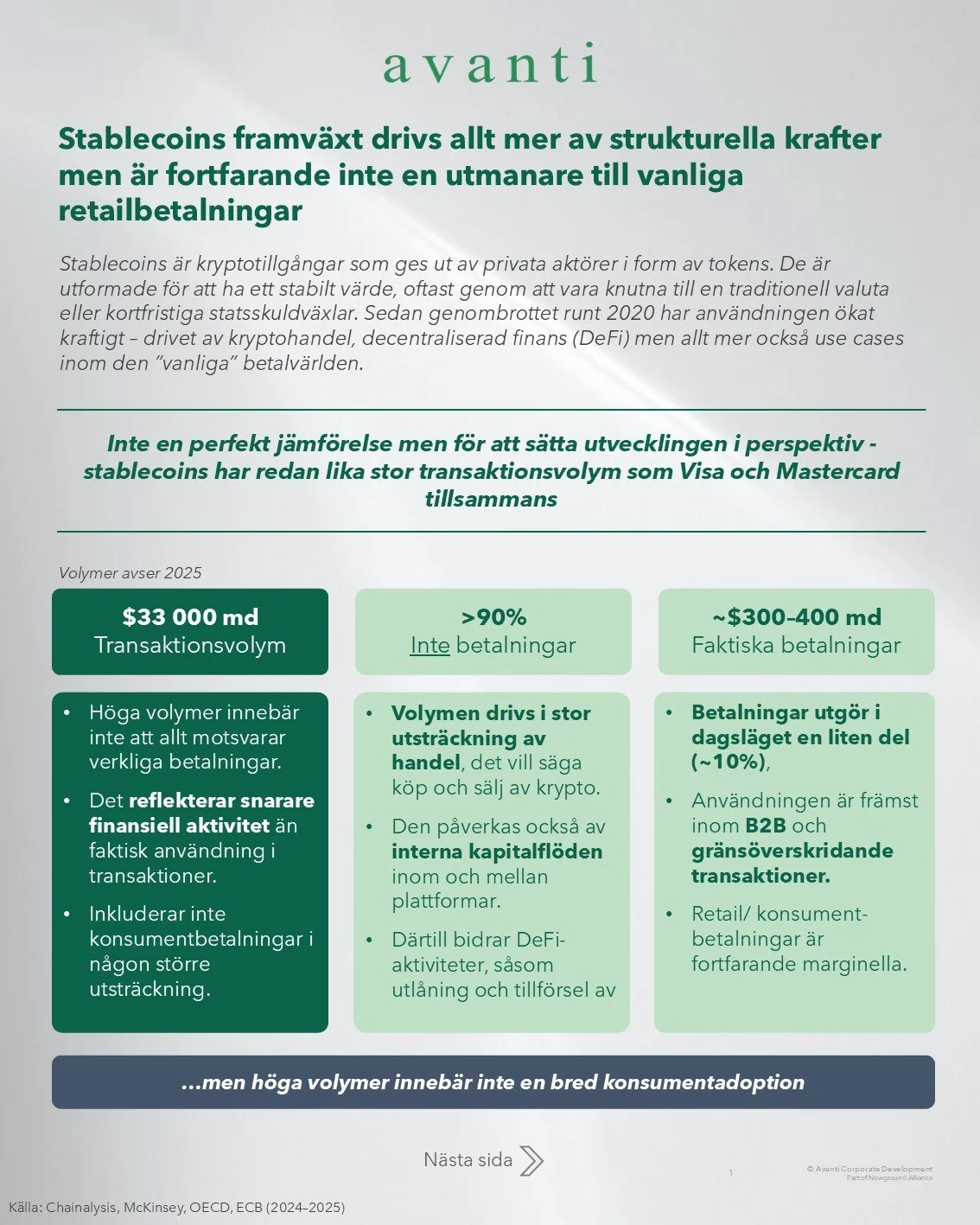
Large volumes, limited payments
It’s not a perfect comparison, but it puts the development in perspective: stablecoins already handle transaction volumes on par with Visa and Mastercard combined, around USD 33 trillion in 2025. More than 90% of that volume is not payments. It’s mostly crypto trading, internal capital flows between platforms, and DeFi activity. Actual payments amount to roughly USD 300–400 billion, mainly B2B and cross-border transactions, while consumer payments remain marginal. In other words, stablecoins are largely about how capital moves within the financial system.
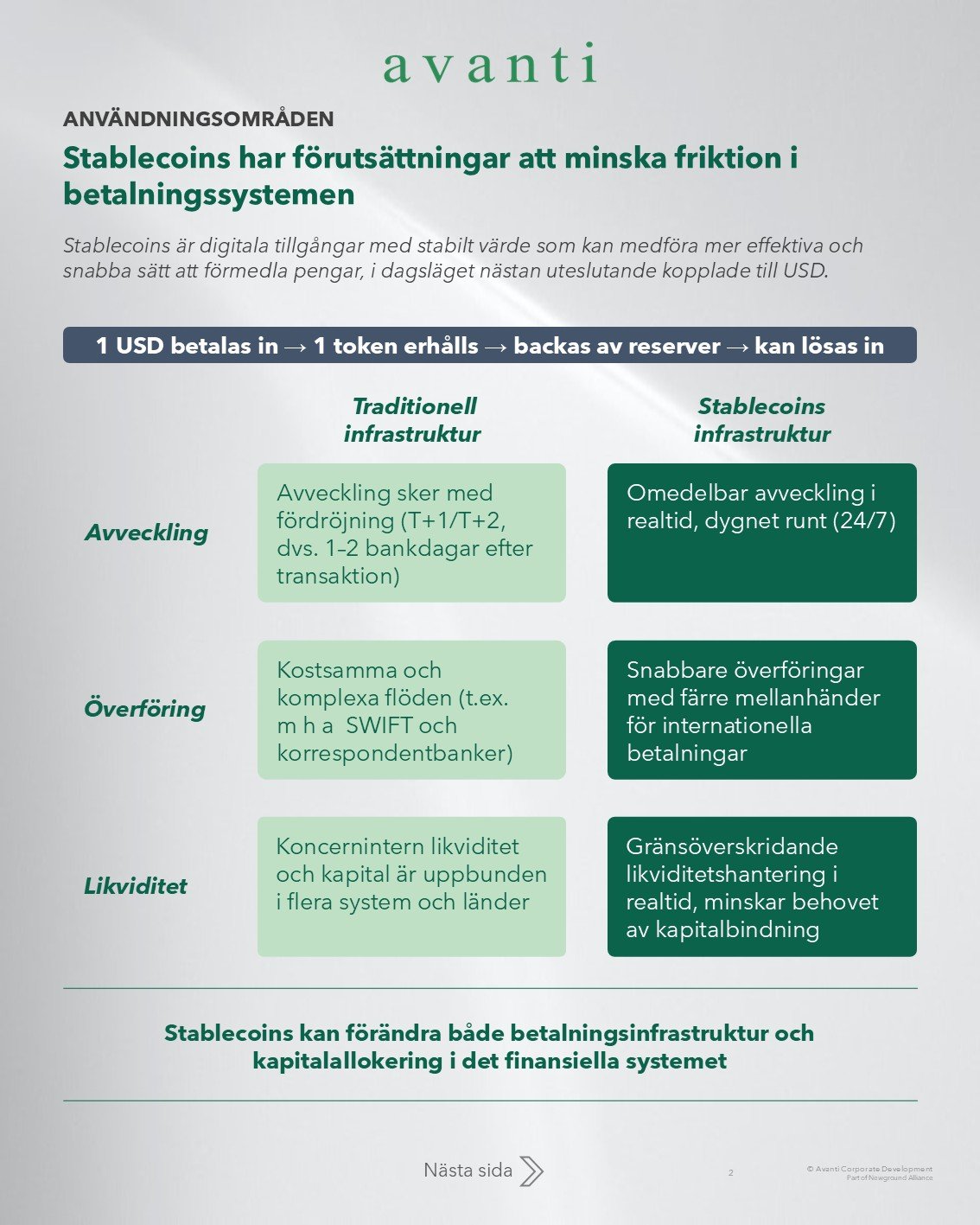
Potential to reduce friction in payments
Compared with traditional infrastructure, stablecoins offer real-time settlement around the clock, faster international transfers with fewer intermediaries, and cross-border liquidity management in real time. This means they could change both payment infrastructure and how capital is allocated in the financial system.
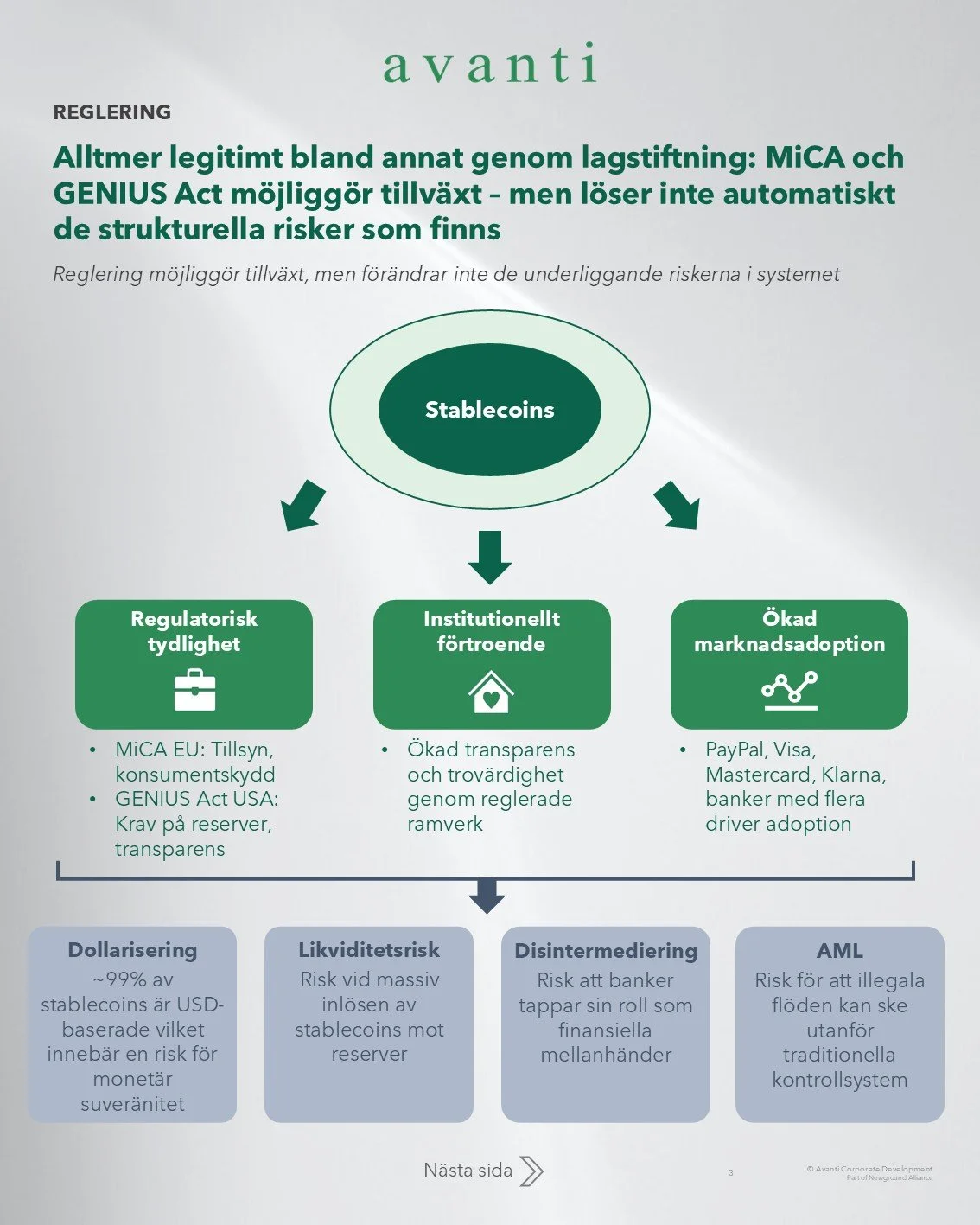
Regulation is accelerating development, but the risks remain
Development is speeding up as regulation takes shape, through MiCA in the EU and the GENIUS Act in the US. At the same time, financial players such as PayPal, Visa, Mastercard, Klarna and several banks are getting involved, and new use cases are being tested in practice. But regulation doesn’t remove the underlying structural risks: dollarisation (around 99% of stablecoins are USD-based), liquidity risk from large-scale redemptions, disintermediation of banks, and AML risks from flows outside traditional control systems.
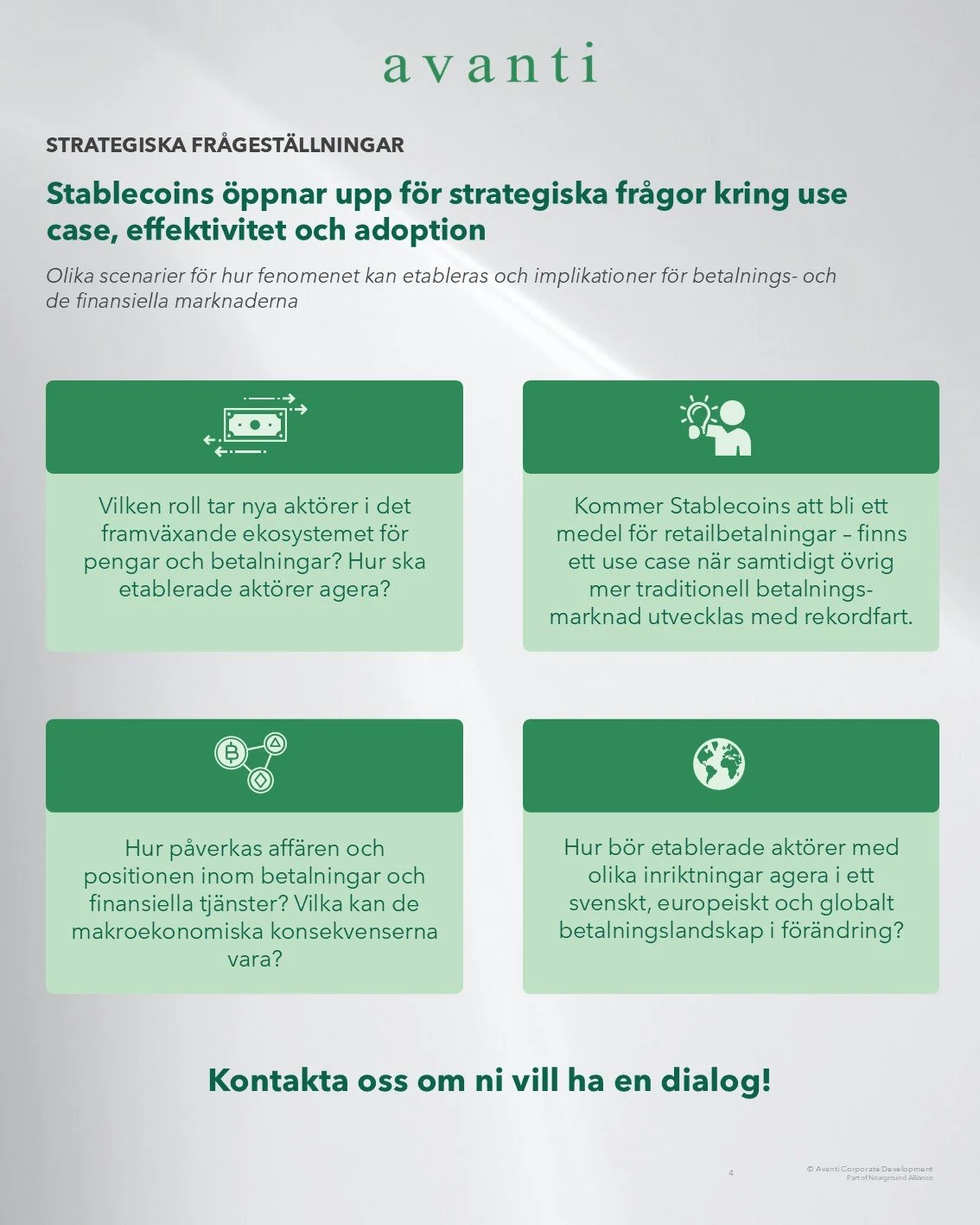
Strategic questions for financial players
How will business models be affected?
Where do new risks and dependencies arise?
What role do different players want to take going forward?
Let’s talk
Contact Christian Rutz (christian.rutz@avanti.se) to book a meeting.