On 10 July 2027, the EU’s new Anti-Money Laundering Regulation (AMLR) will apply. It replaces the Swedish Anti-Money Laundering Act with a harmonised, directly applicable regulation across the EU, and the national interpretations that Swedish firms have built their frameworks on will no longer apply.
Money laundering remains under close scrutiny
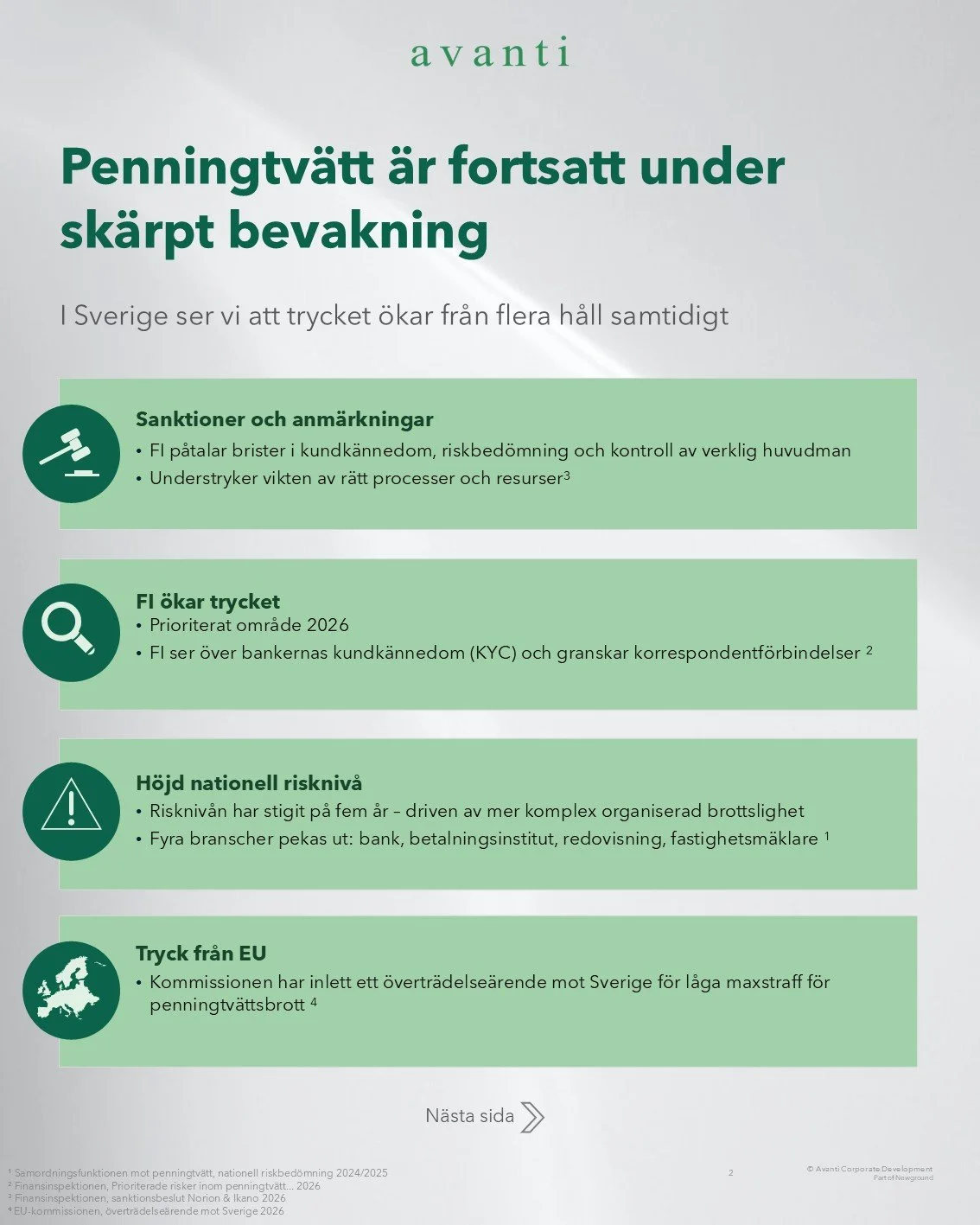
In Sweden, pressure is increasing from several directions at once:
Sanctions and remarks: Finansinspektionen (the Swedish FSA) has pointed to shortcomings in customer due diligence, risk assessment and beneficial ownership checks, stressing the importance of the right processes and resources.
FI is stepping up: AML is a priority area for 2026, with reviews of banks’ KYC and correspondent banking relationships.
A higher national risk level: The risk level has risen over five years, driven by more complex organised crime. Banks, payment institutions, accounting firms and estate agents are singled out as high-risk sectors.
Pressure from the EU: The European Commission has opened infringement proceedings against Sweden over low maximum penalties for money laundering offences.
Changes that affect the whole business
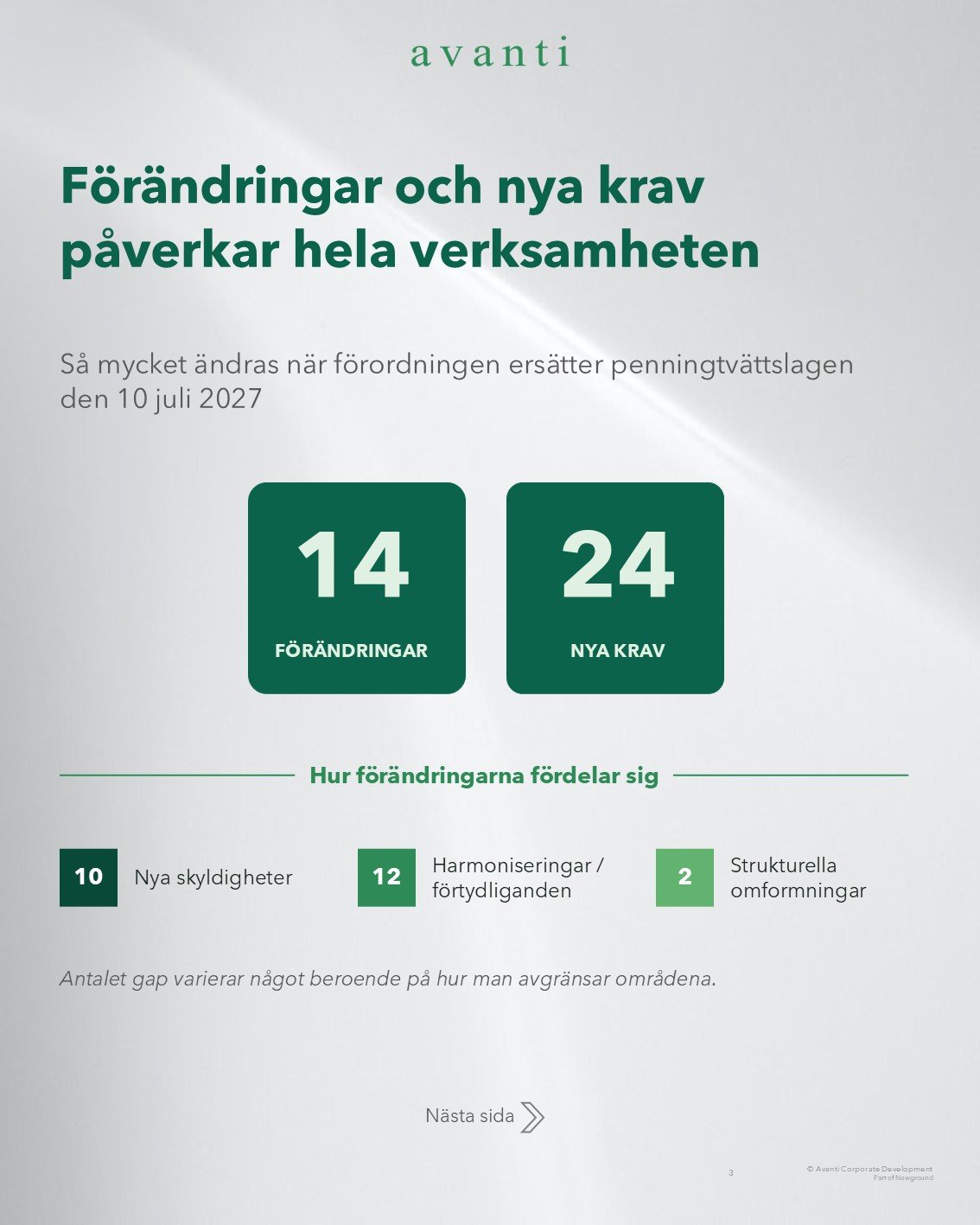
AMLR brings stricter requirements on data quality, traceability, customer due diligence and continuous risk-based work. At the same time, harmonisation creates more consistent conditions for firms operating in several EU countries. Comparing the current Swedish framework with AMLR, we have identified 14 major areas of change and at least 24 specific differences that may affect processes, governance and technical solutions. Key changes include:
Stricter customer due diligence (CDD) requirements
New requirements related to beneficial ownership
Changed requirements for governance and accountability
Harmonised rules for digital onboarding
EU-wide technical standards and supervision through AMLA
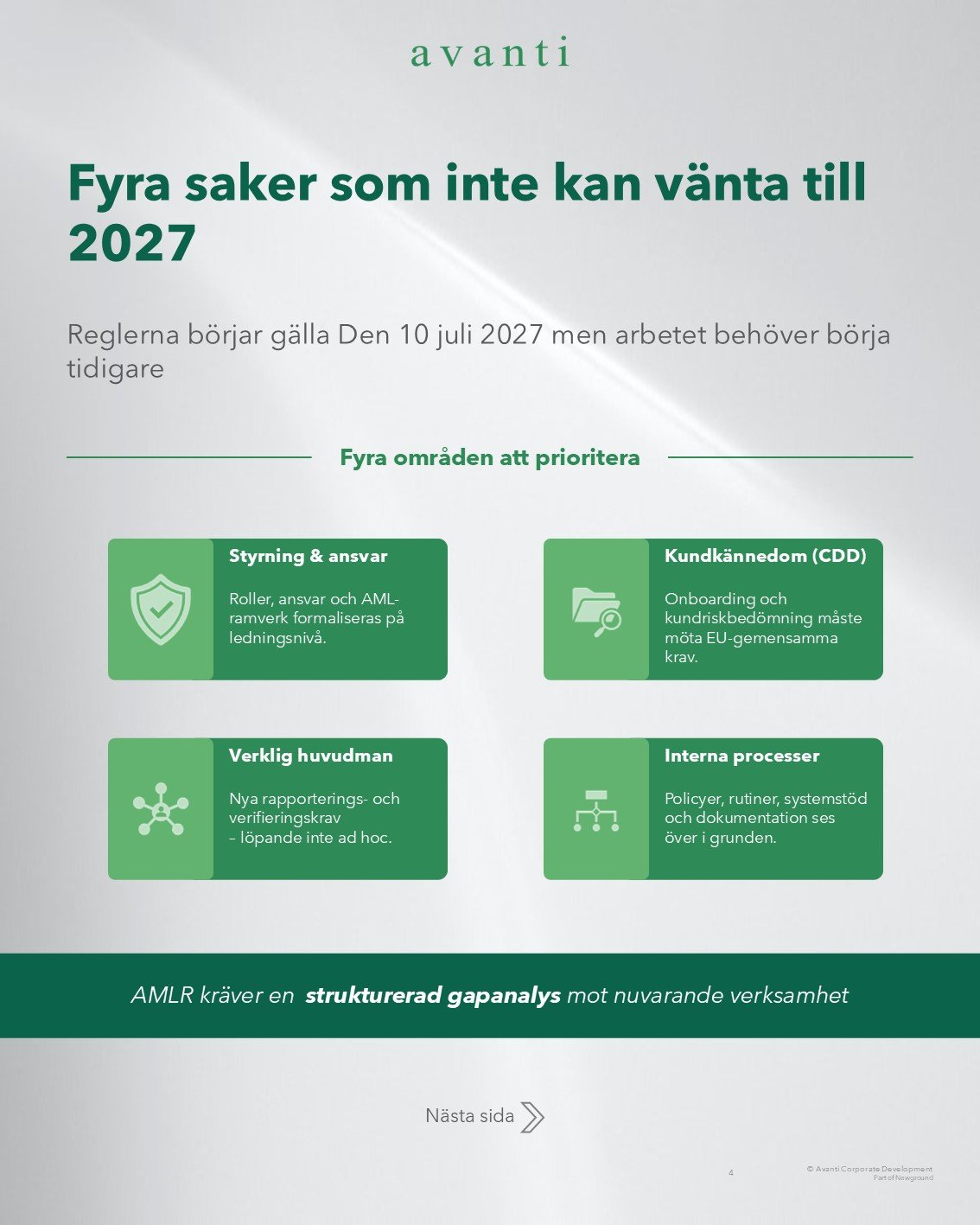
Four areas to prioritise now
Governance and accountability: Roles, responsibilities and AML frameworks are formalised at management level.
Customer due diligence: Onboarding and customer risk assessment must meet common EU requirements.
Beneficial ownership: New reporting and verification requirements, on an ongoing basis rather than ad hoc.
Internal processes: Policies, procedures, system support and documentation need a fundamental review.
2027 may feel far away, but preparations need to start now. For many firms, the work isn’t just about interpreting new requirements. It’s about understanding which processes, systems, data flows and responsibilities actually need to change, and that starts with a structured gap analysis against current operations.
How will AMLR affect you?
We help Swedish firms take AMLR from regulation to practice: which requirements are new, where the biggest gaps are, and which actions to prioritise before 2027. Contact Melina Stenkil (melina.stenkil@avanti.se), Christian Rutz (christian.rutz@avanti.se) or Carl Älfvåg (carl.alfvag@avanti.se). Read more about our Regulatory Advisory offering.