Avanti has analysed the Swedish mortgage market to highlight the changes shaping its future development.
A highly competitive core segment
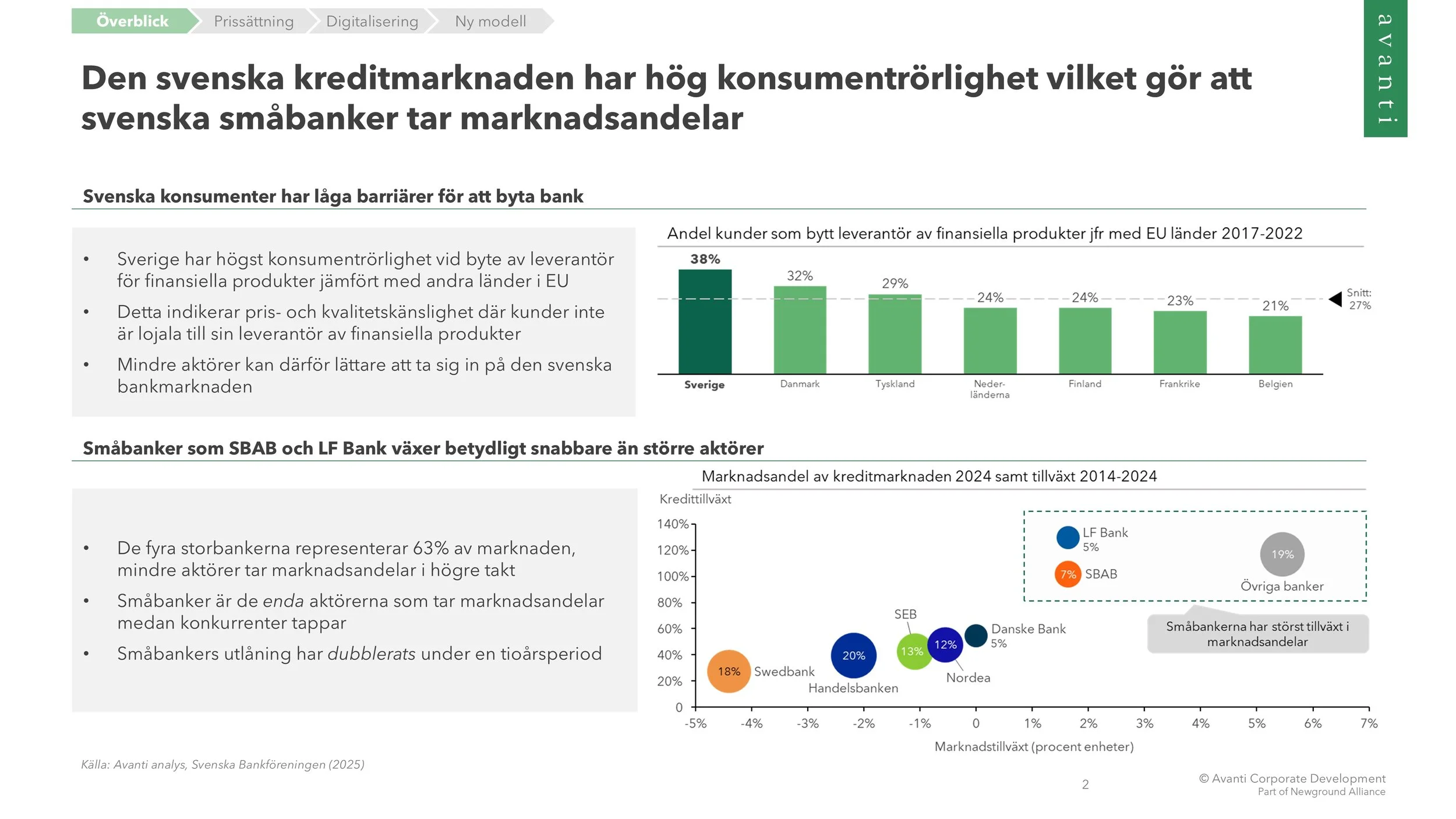
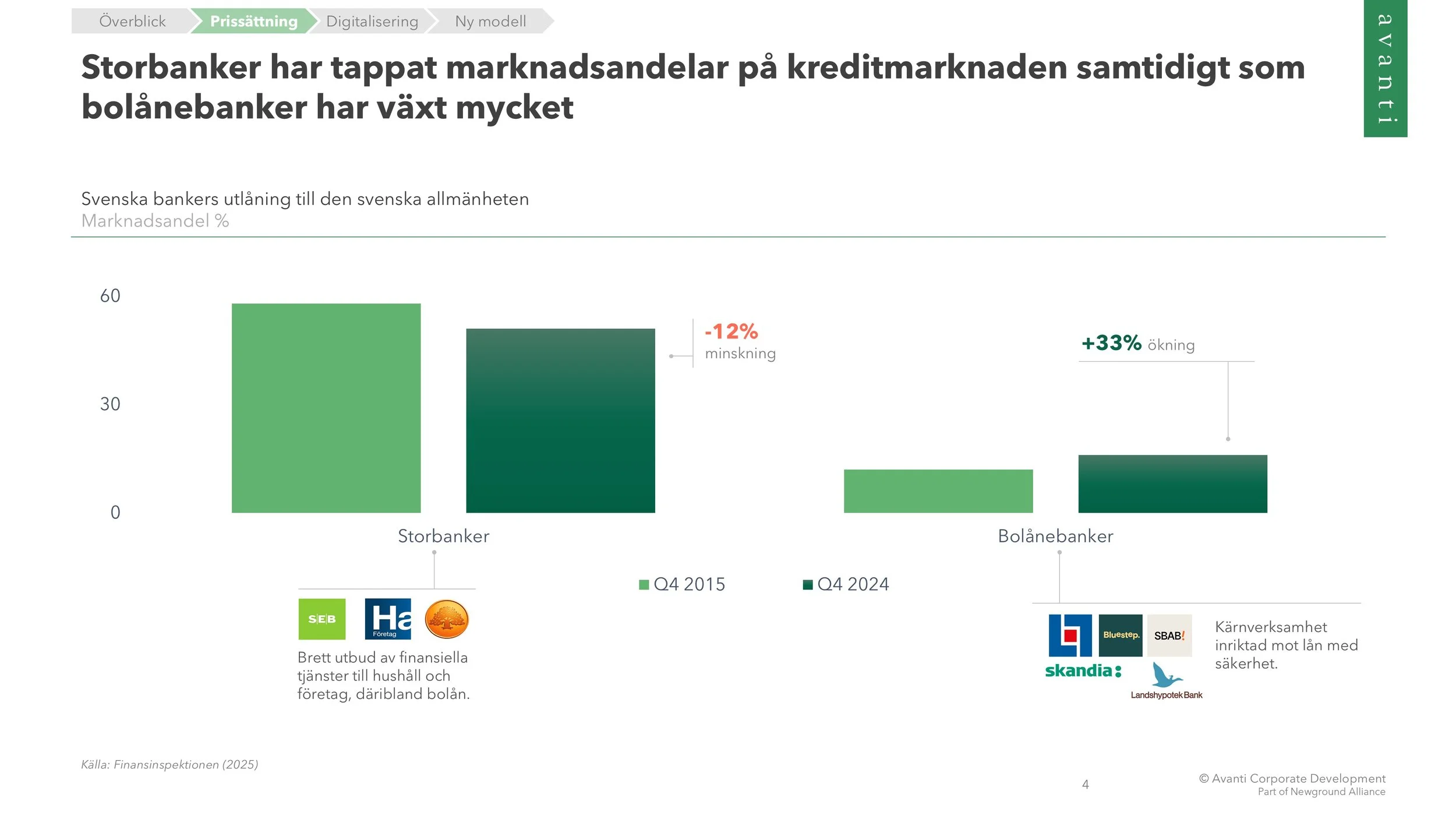
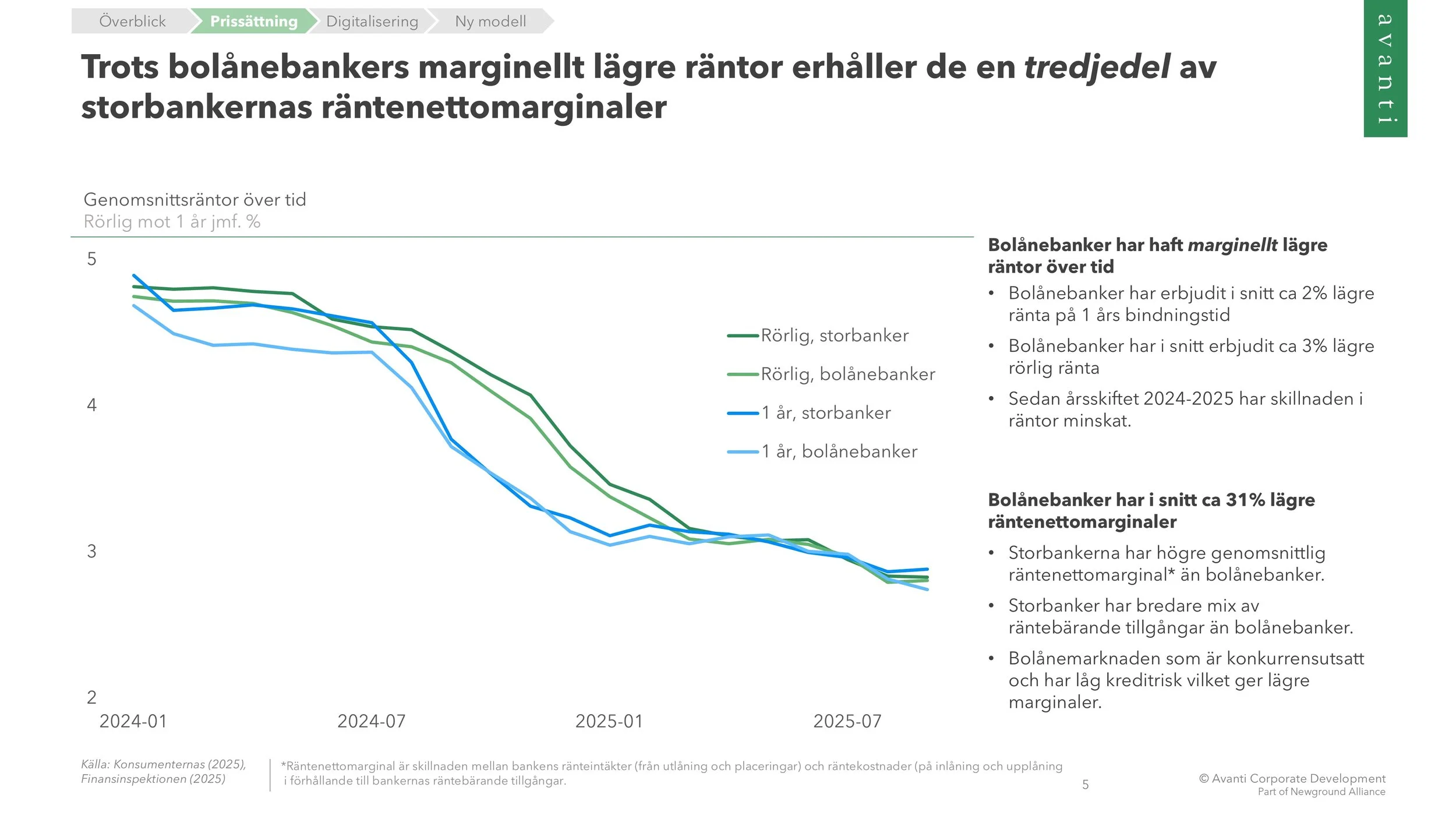
The Swedish mortgage market is undergoing a clear transformation. Consumers have become more mobile and switching banks has become easier, which has gradually changed the competitive dynamics and made it easier for smaller players to gain market share. Smaller banks have grown faster than the major banks for some time, while market transparency has increased and margins have come under pressure.
On average, mortgage banks have net interest margins around 31 per cent lower than the major banks, which shows how squeezed profitability is in this part of the market.
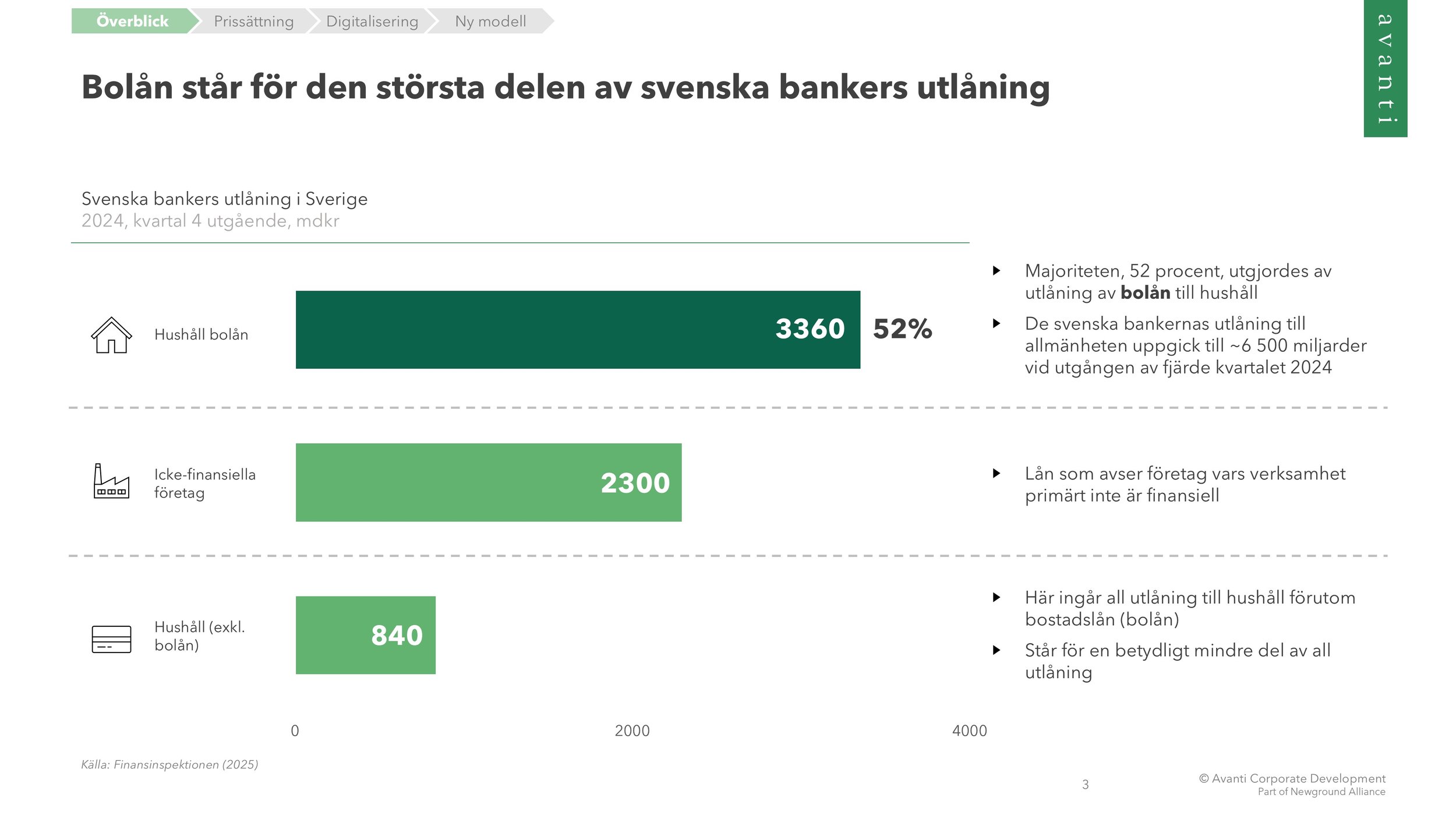
Mortgages remain the core of Swedish bank lending, accounting for 52 per cent of Swedish banks’ total lending, which makes the segment central to competition. Because the segment matters so much to banks’ earnings and balance sheets, changes in mortgages have broad strategic consequences. As customers increasingly compare prices, terms and digital offerings, the pressure intensifies further.
Digitalisation and regulation are driving the shift
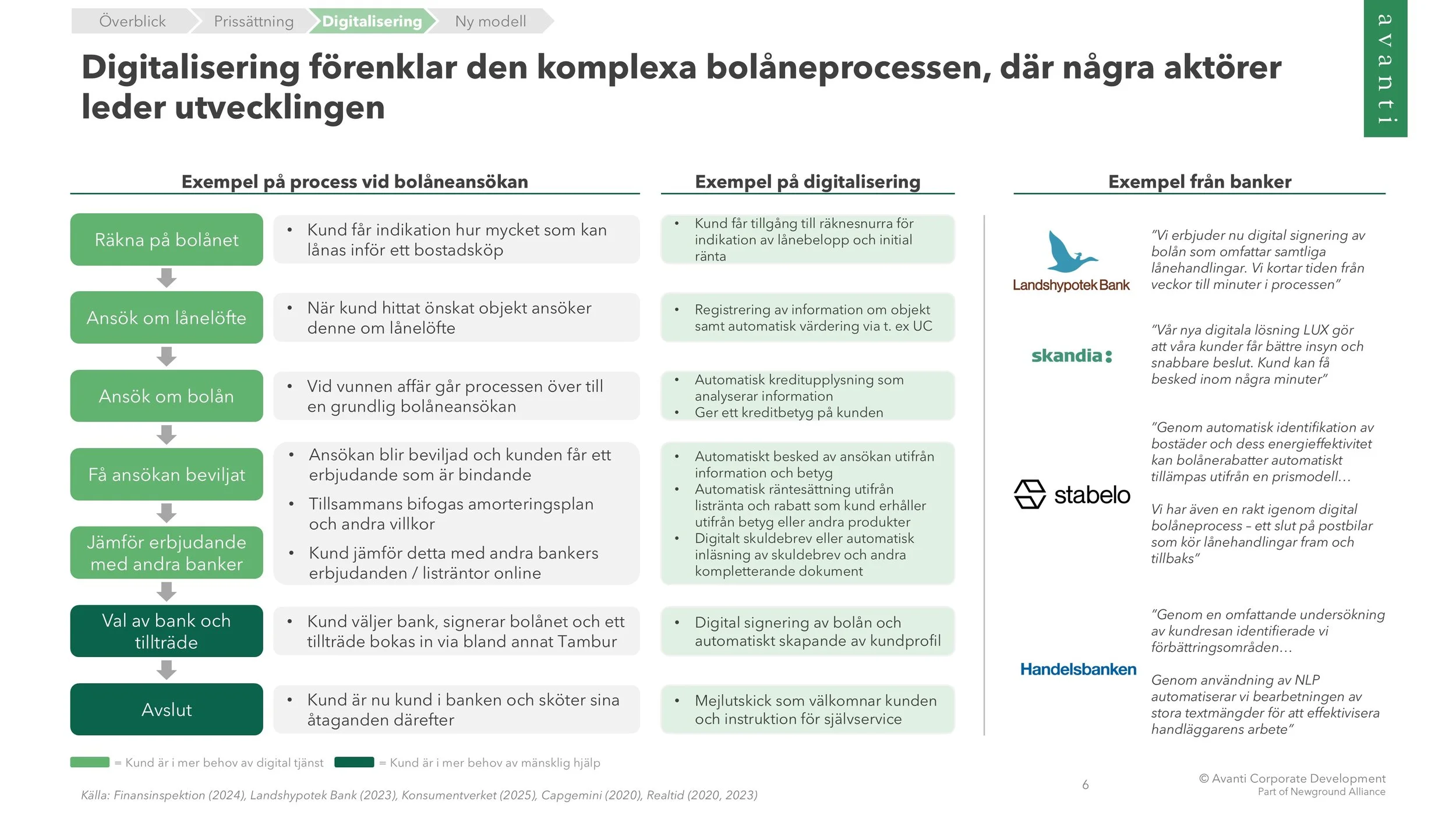
Digitalisation is driving change across the entire mortgage process. Automated credit assessments, digital signing and faster customer journeys enable smaller players to offer efficient, user-friendly processes that were previously associated with the resources of larger banks.
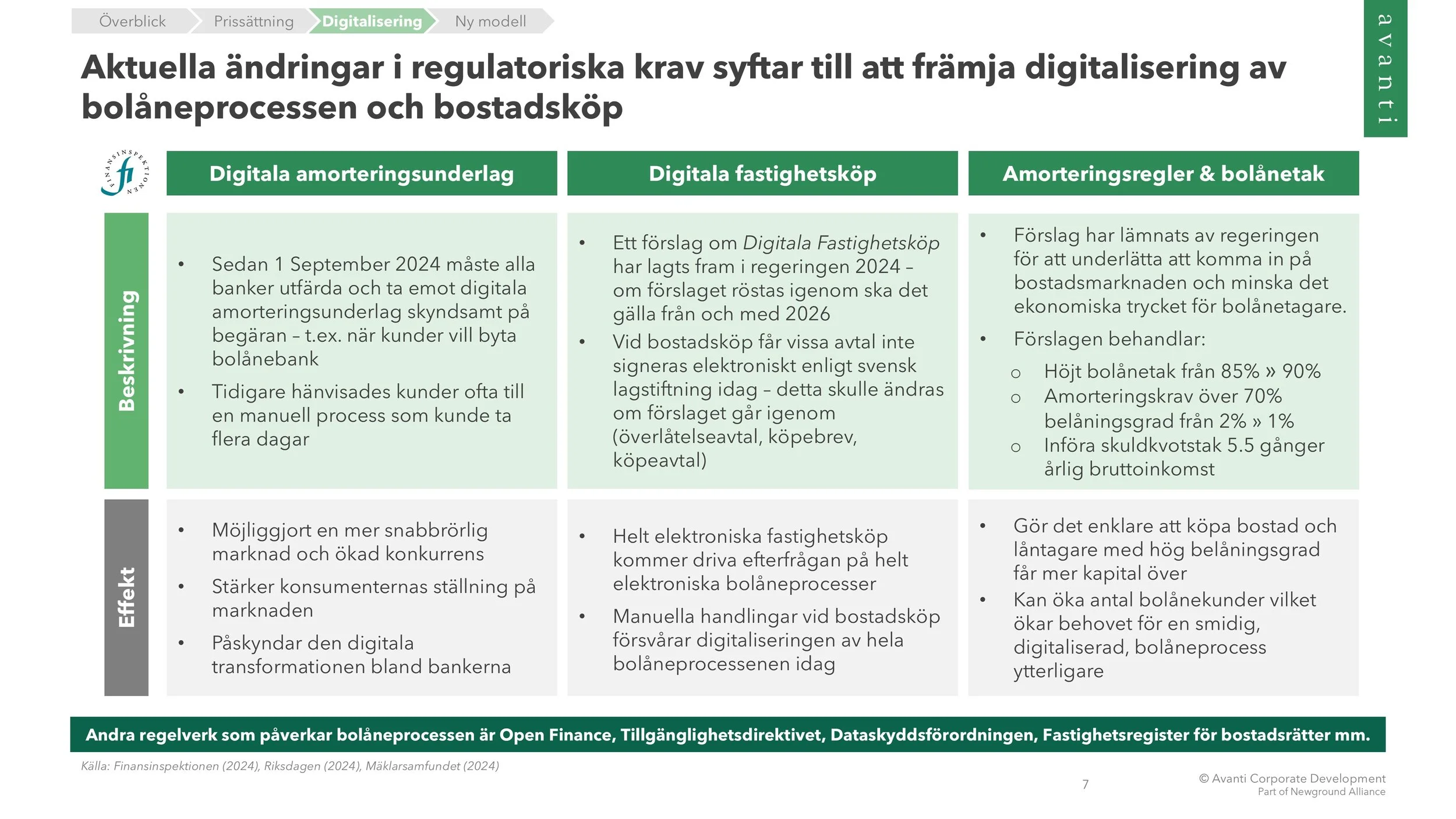
New regulatory requirements are reinforcing this development. For example, since September 2024 banks have been required to provide digital amortisation documentation, making it easier for customers to switch banks and further increasing competitive pressure. The proposal to introduce digital property purchases from 2026 could further accelerate the move towards fully electronic mortgage processes.
New business models are challenging the structure
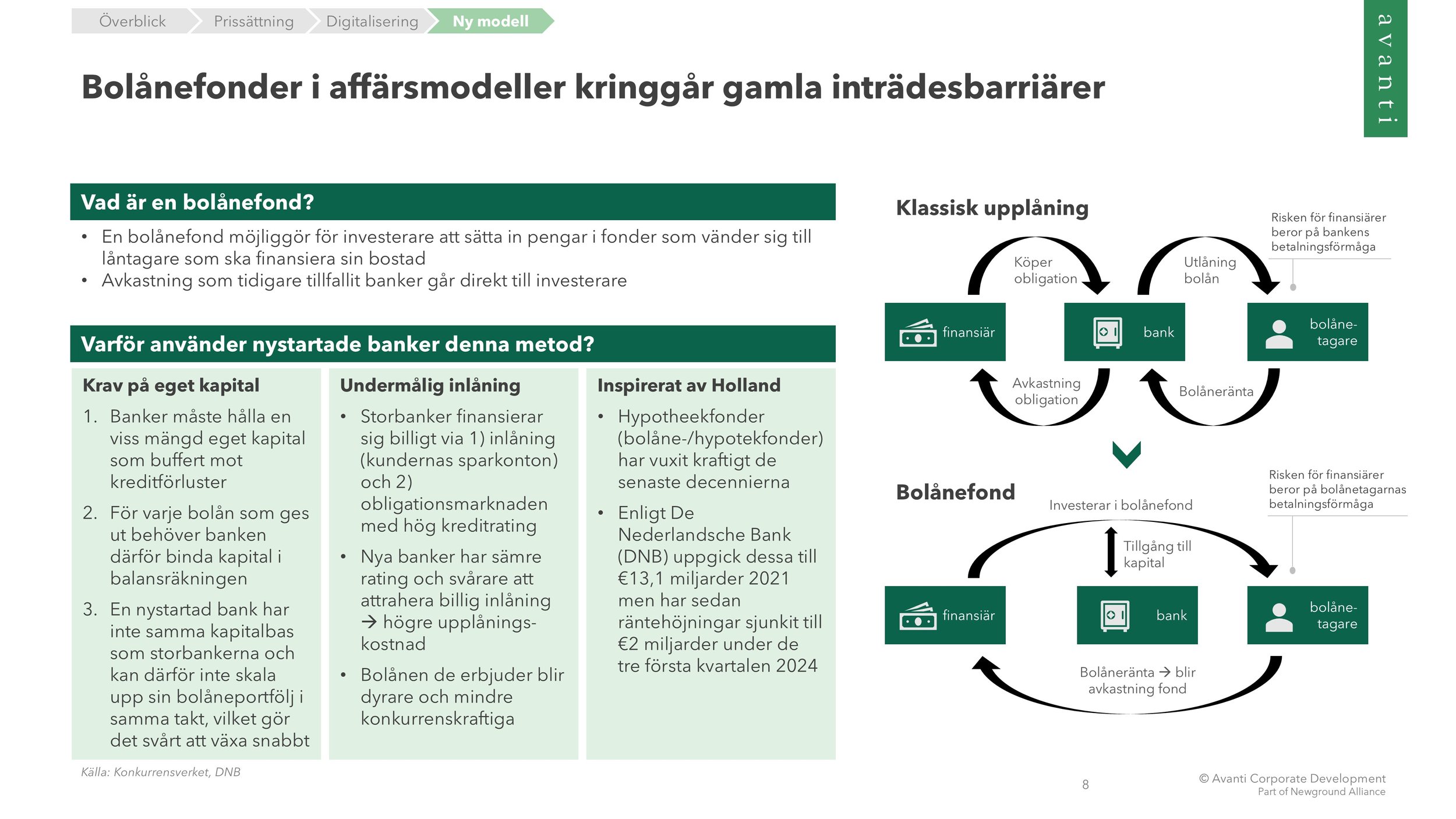
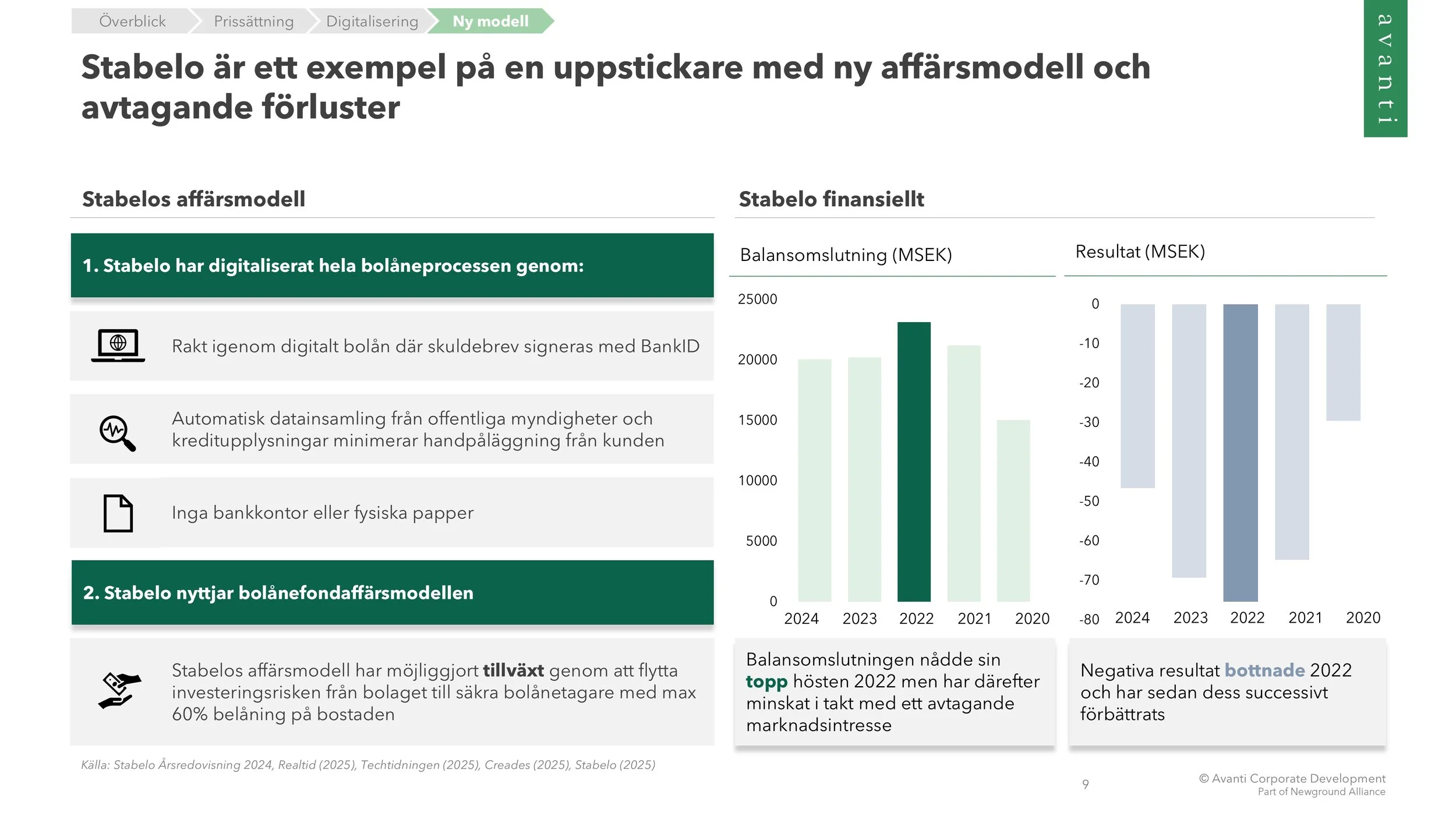
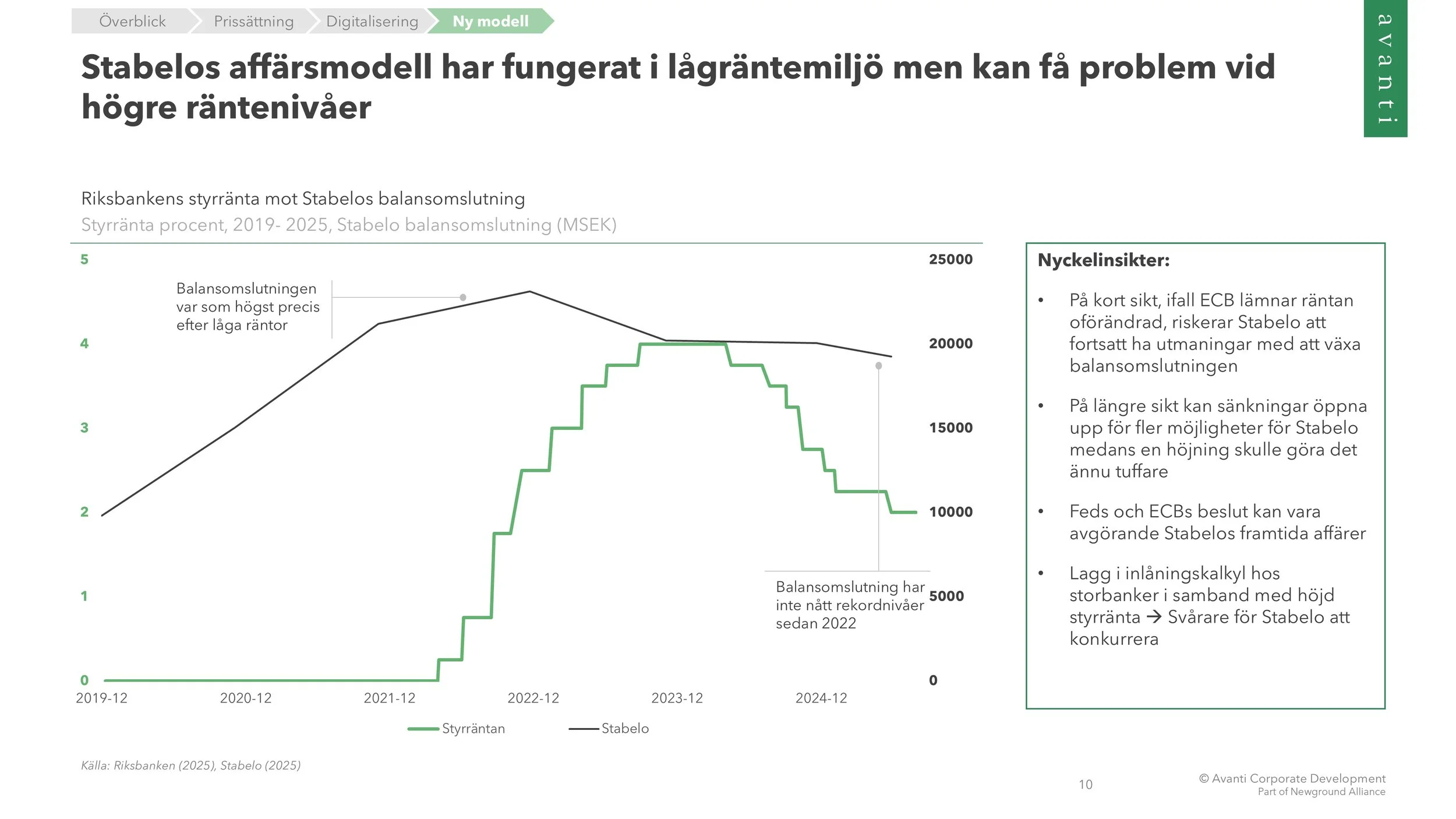
Alongside changes in customer behaviour and distribution, interest in alternative business models is growing. Mortgage funds have been established and have become a way for challengers to bypass traditional capital requirements and scale their lending without the balance sheet constraints that characterise traditional banking. Stabelo is one example of this structure and development.
A market shift with strategic implications
In the Swedish mortgage market, consumer-driven behaviour, technological innovation and changing regulations are together reshaping the competitive landscape and putting pressure on established business models. For both new and established players, this creates opportunities to develop better customer experiences, more efficient processes and more flexible business models.
The analysis below explores the development of the Swedish mortgage market in more detail. Read more about how we support banks on our Banking page and about our Regulatory Advisory offering. Contact us to learn more.